About Me

My background
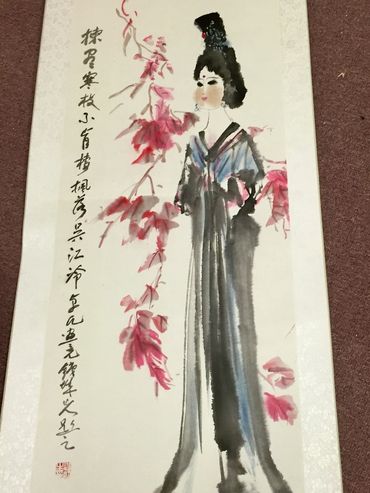
After years of traversing San Francisco’s enchanting Chinatown, its backstreet bookstores and basement galleries, I discovered and became captivated by the art of Chinese brush painting. To undertake this art form, one must commit to a scholarly life. Through the study of calligraphy, poetry and music, one’s character is developed, which appealed to the “eternal student” part of my own nature. After 18 years of diligent studies, I have settled into da xieyi, a style of painting that seeks to express the spirit of objects rather than their reality. I am privileged to have studied under internationally known and respected teachers Chow Shung-hwa (Celia Huddleson), Master Miao Jen Sung, and Professor Aiquin Zhou.
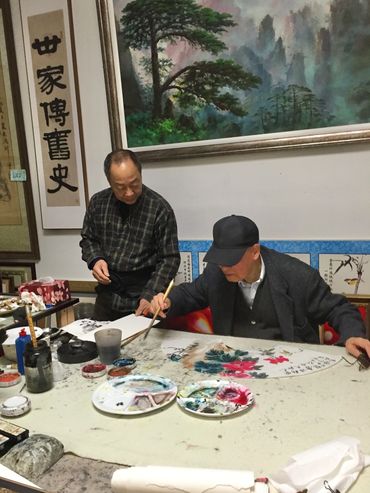
Studying Chinese brush painting in San Francisco’s Chinatown placed me inside a lineage far older than any classroom. Under the guidance of a master teacher, I was invited into spaces rarely opened to outsiders, let alone a Caucasian woman. I sat quietly among elderly masters whose hands carried decades of discipline, memory, and devotion to the art. Their presence alone was instruction—how they held silence, how they regarded the brush, how reverence guided every movement before ink ever touched paper.
During critiques, I witnessed an exchange that was both rigorous and deeply humane. The masters spoke candidly to one another, correcting, encouraging, and challenging their colleagues with a shared understanding that skill was inseparable from character. Though I was a guest, never pretending to belong to what was not mine, I was treated with a generosity that transcended language. Observation became my privilege, and listening became my education. I learned that mastery was not claimed but demonstrated through humility and lifelong study.
The ceremonies left the deepest imprint. As incense burned and names were spoken, ancestors were honored—teachers who had carried the lineage forward through war, migration, and exile. These rituals were not symbolic gestures but living acknowledgments of responsibility: to remember, to preserve, and to transmit. Sitting among them, I felt the weight of continuity and the rare trust extended to me simply to witness. It was an experience that reshaped my understanding of art—not as personal expression alone, but as stewardship of something sacred, communal, and enduring.
These experiences did more than shape my work; they quietly reshaped how I live. What I learned through Chinese brush painting—discipline, restraint, reverence, and attention—entered my private space and daily rituals. The practice taught me how to move more deliberately, how to listen before acting, and how to honor what came before me. Art became less about expression and more about alignment: with lineage, with time, and with a sense of responsibility carried inward.
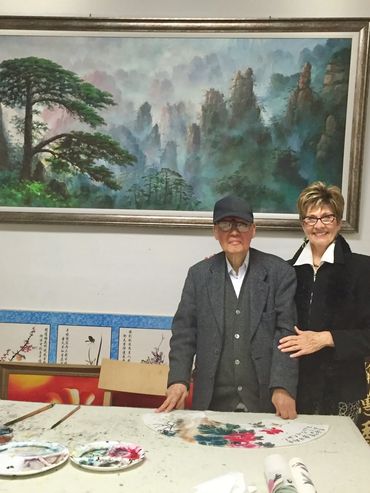
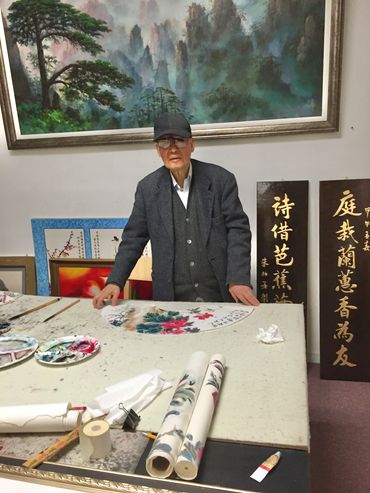
Mr. Miao, Beverly Valentine, and Zhuofan Ye, the owner of Stylers Art Gallery San Francisco, and Director of International Artists Association
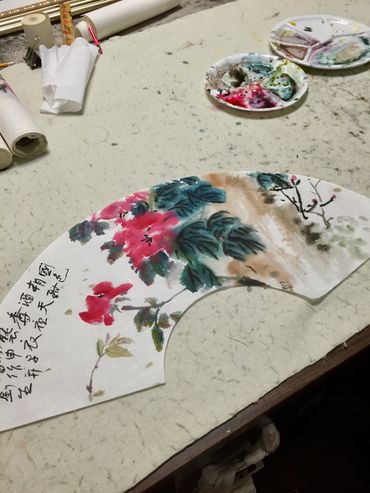
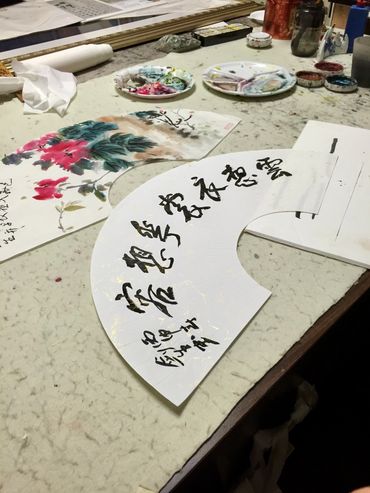
Inspiring Creations Gallery


